

Content note: This story discusses addiction, infidelity, family trauma, incarceration, and loss.
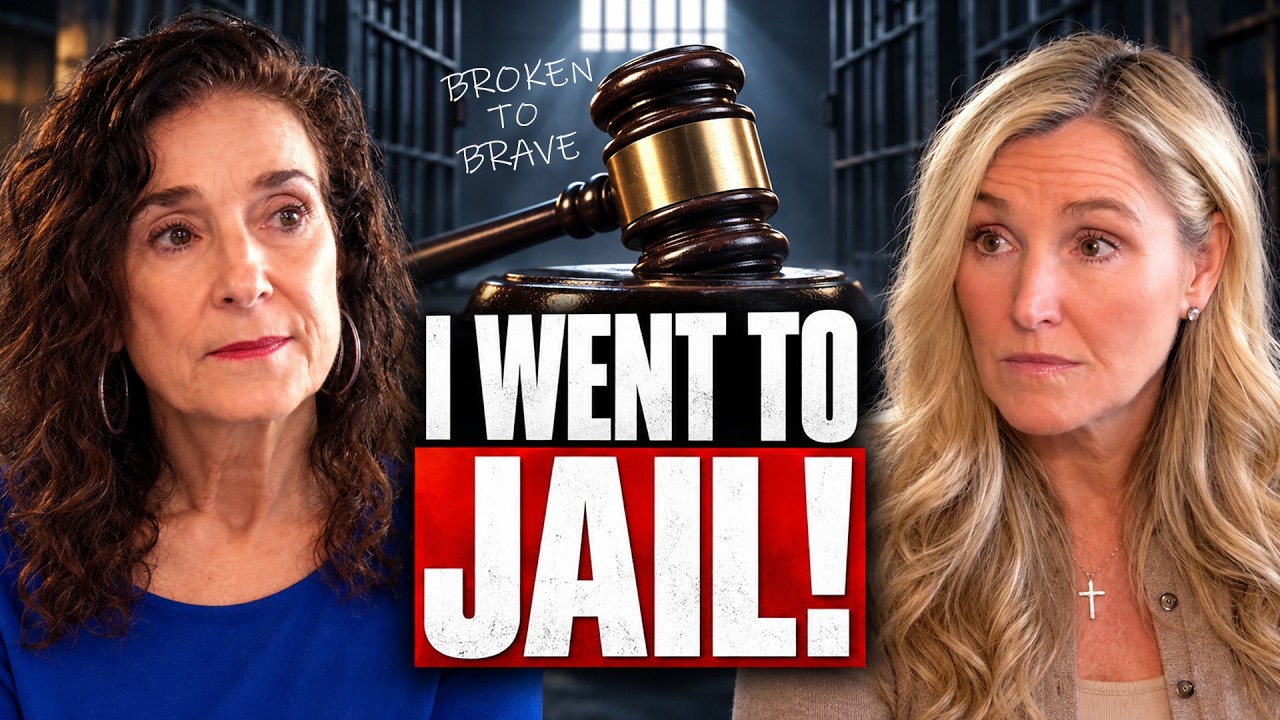
Dr. Linda Varisco rebuilt her life after the breakdown of her marriage, her former husband’s death, financial hardship, and a federal prison sentence. In this episode of Broken to Brave, she shares how family support, writing, helping others, and a new professional chapter helped her move forward without letting her past define her.
What do you do when the life you thought you had disappears—and the next chapter is nothing you could have imagined?
That is the question at the heart of my conversation with Dr. Linda Varisco. Linda trained as a chiropractor, built a practice and a family, and believed she was living her dream. Then came a series of losses that changed nearly every part of her life.
Her story is not a neat before-and-after transformation. It is a conversation about betrayal, accountability, grief, boundaries, and learning to recognize yourself again. What stayed with me most was this: Linda did not have to erase her past to create a meaningful future.
This article is adapted from Linda’s personal account in our podcast interview. Descriptions of the legal case and other people’s conduct reflect her recollections, not an independent investigation.
Who is Dr. Linda Varisco?
Dr. Linda Varisco is an author and former practicing chiropractor who shares her experiences of marriage, motherhood, loss, incarceration, and rebuilding her life. In our interview, she describes growing up on Long Island, attending Villanova, and going on to chiropractic school.
She met her future husband, Joe, while walking on a beach in Cancun. He was also a chiropractor, and the connection felt immediate. After a long-distance romance, they made a life together in Florida, with a practice and two children.
Linda describes those early years as living in “Camelot.” That makes what followed especially difficult: she was not only losing a relationship, but also the future she thought they were building together.
When the dream began to unravel
According to Linda, a business Joe started alongside their chiropractic work became a source of serious conflict. After giving others shares in that business, he was removed from his own company. She remembers his withdrawal afterward and the strain it placed on their marriage.
Later, following his father’s death, Linda noticed more changes in his behavior. She says she discovered evidence of drug use and eventually witnessed his infidelity. The life she recognized and the life unfolding in front of her no longer matched.
In our conversation, Linda speaks openly about the pain and rage of that period, including a confrontation she acknowledges was not funny. Her account is not a model for handling confrontation. What matters to the larger story is the turning point it created: she could no longer keep pretending everything was okay.
Protecting her children became the turning point
A car accident involving Joe and their son brought the situation into sharper focus. Linda describes her son being hospitalized and needing emergency surgery. For her, that experience became a line in the sand.
She says they divorced in September 2007. When Joe later developed advanced cancer, she became his healthcare surrogate while keeping the boundary that he would not move back into the family home. He died in January 2009.
Linda describes grieving more than once: for the man she had known, for who he became, and for his death. She also describes telling him that she had already forgiven him.
For Linda, forgiveness did not mean pretending the harm had not happened. And compassion did not require giving up the boundaries she had put in place for her children.
Financial desperation and a decision that changed her life
After Joe’s death, Linda says she faced an expensive building mortgage, lost tenants, and a major disruption to her practice. She was trying to keep her family and business afloat while carrying grief.
She describes entering an arrangement with clinic operators who rented space in her building. Despite an initial feeling that something was wrong, she went ahead after receiving reassurance from someone she trusted.
Linda says she allowed the operators to use her tax identification number while they pursued licensing. In the interview, she identifies that decision as her biggest mistake in the arrangement.
Her office was later raided, and she became involved in a federal case. Linda recounts pleading guilty and cooperating with investigators for three years. She says she expected that cooperation would keep her out of prison, but in March 2018 she was sentenced to a year and a day.
Linda is clear about her own role: “I did something wrong, I let them use my tax ID number.” Her story holds two truths together: she was overwhelmed and vulnerable, and she made a decision with serious consequences. Recognizing the circumstances is not the same as denying responsibility.
How did Linda begin rebuilding her life in prison?
Linda describes rebuilding through routine, connection, and purposeful activity. During her time at the Coleman women’s camp, she walked, read, learned to crochet, helped other women, and wrote the memoir she had wanted to write for years.
Arriving was terrifying. She remembers deciding not to look back at her daughter as she went inside, because she feared she would not be able to keep moving. Once there, a woman sharing her living area helped her through those first overwhelming emotions by walking the track with her.
Linda says she spent seven months at the camp, followed by two months in a halfway house and a final month under house arrest. The experience was difficult, but she found ways to make the days matter.
She also describes starting a Pilates and yoga class that grew from a few women to a larger group. Before leaving, she encouraged others to continue it and pass the practice on.
Writing gave her another purpose. With pen and paper, she began telling the story of her life. The chapter she had feared most became the place where she finally started the book she had been putting off.
A new career chapter—and a different definition of success
After returning home, Linda chose not to pursue returning to chiropractic practice. She had spent nearly three decades in the profession and felt ready for something different.
She initially worked for an attorney friend, then applied her marketing experience to her partner’s plumbing company. The work changed, but the skills she had developed did not disappear.
At the time of our interview, Linda described herself as semi-retired: promoting her books, doing podcast interviews and book signings, crafting, and rescuing baby squirrels. She spoke with gratitude about her children and the people who continued to support her.
For Linda, a new life did not mean returning to every part of the old one. It meant choosing what she wanted to carry forward—and what she was ready to leave behind.
What can we take away from Linda’s story?
These are the reflections I took from our conversation, not a formula for how anyone else must recover.
Pay attention when reassurance overrides your concerns
Linda repeatedly describes feeling uneasy before a decision, then allowing someone else’s confidence to outweigh her concerns. Looking back, she wishes she had taken those feelings more seriously. Her experience invites a useful question: am I comfortable with this choice, or am I agreeing because I feel pressured or desperate?
Compassion and boundaries can exist together
Linda cared for her former husband during his illness without bringing him back into the family home. In her story, forgiveness and protection were not opposites. She could acknowledge what they had shared while recognizing what her children needed.
Accountability does not have to become your entire identity
Linda acknowledges a consequential mistake, but she does not describe herself as only that mistake. She calls herself a wiser version of the same Linda. That distinction is central to the way she tells her story.
Your skills may belong in a different chapter
Leaving chiropractic practice did not mean leaving behind everything she knew. Marketing became a bridge into different work. Her experience offers a hopeful perspective on starting over: a change in direction is not necessarily a return to zero.
Support and purpose mattered in her recovery
Linda emphasizes that she never felt entirely alone. Family, friends, and her partner gave her a life to return to. Writing, movement, and helping others also gave her ways to participate in life while circumstances were difficult.
| Why do you help someone? Because you can.
— Dr. Linda Varisco, Broken to Brave interview |
To explore specific parts of our conversation, start here:
- 29:10: The turning point that made protecting her children non-negotiable.
- 45:31: Sentencing and the shock of an unexpected outcome.
- 56:34: Finding purpose through reading, writing, and connection.
- 1:15:08: What Linda learned and how she sees herself now.
- 1:22:17: Her memoir and the stories behind her books.
- 1:32:09: Choosing a new professional chapter.
Frequently asked questions
What is Dr. Linda Varisco’s story about?
In her Broken to Brave interview, Linda recounts rebuilding after marital betrayal, her former husband’s death, financial hardship, and incarceration. She reflects on taking responsibility, maintaining boundaries, finding purpose, and creating a different life.
Did Dr. Linda Varisco write her memoir in prison?
Yes. Linda says she wrote her memoir with pen and paper while at the Coleman women’s camp. After her release, she brought the manuscript to a publisher, who divided it into three books.
What is The Girl with the Million Dollar Smile?
The Girl with the Million Dollar Smile is the first book Linda discusses in the interview. She describes it as covering her childhood, meeting Joe, their wedding, and the betrayal that changed her marriage.
What helped Linda move forward after incarceration?
Linda credits a strong support system and describes returning to a home, relationships, and meaningful activities. Writing, helping others, and applying her marketing skills to a new field were important parts of her next chapter.
Did Linda return to chiropractic practice?
No. In the interview, Linda says she chose not to pursue returning to practice. She felt physically tired after years in the profession and wanted a new chapter, eventually moving into marketing work and promoting her books.