

Is Your Biological Clock Dictating Your Dating Life?
How to pursue marriage and parenthood without rushing into the wrong relationship
Quick answer: If your biological clock feels loud, do not let urgency choose your partner. Get clear about your goals, discuss marriage and children early, evaluate compatibility and character over time, and explore reproductive options with a qualified medical professional. The goal is not to ignore time—it is to use it wisely.
Wanting marriage and children can create enormous pressure, especially when age, family expectations, or fertility concerns enter the picture. But choosing a spouse or co-parent from fear can create consequences that last far longer than a dating timeline.
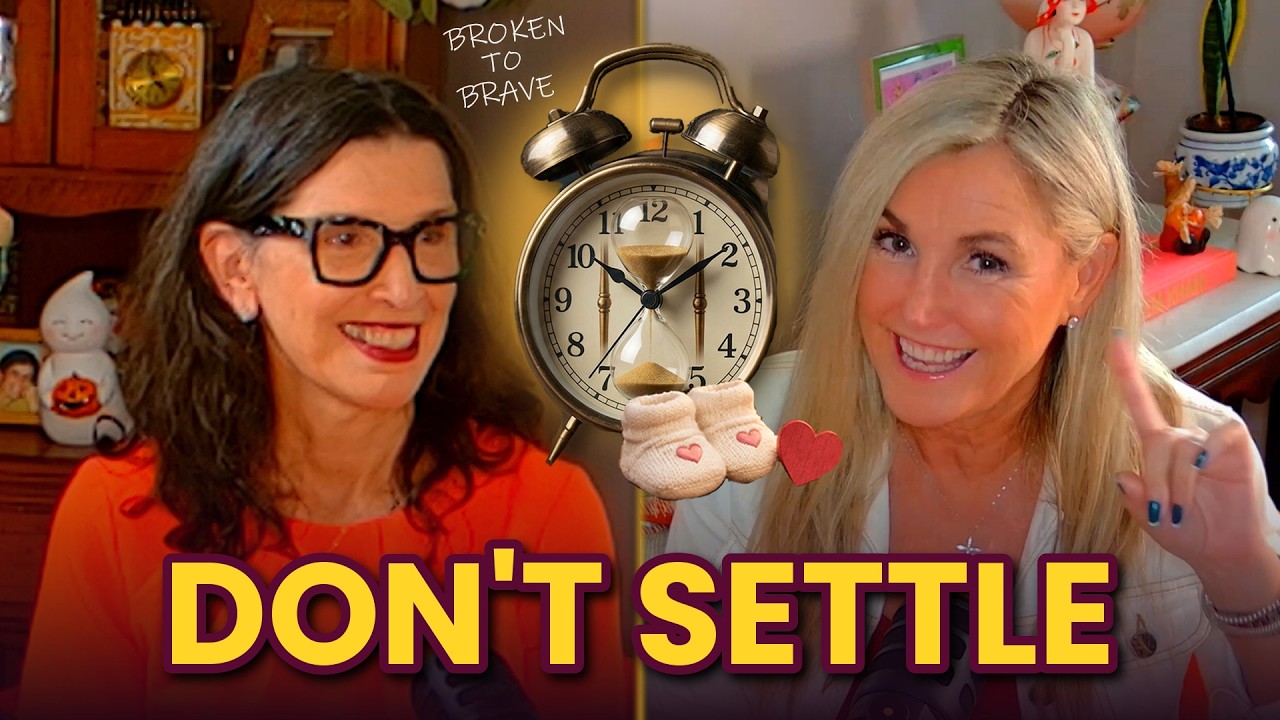
In a candid conversation on the Broken to Brave podcast, dating and relationship coach Donna Barnes and Kathleen Giordano examine how biological-clock anxiety affects both women and men—and why honesty, compatibility, and thoughtful timing matter more than panic.
In this article:
- Why biological-clock pressure can distort dating decisions
- How to evaluate a potential spouse and co-parent
- When to discuss marriage and children
- How to avoid wasting years in an incompatible relationship
- Questions to ask before marriage or parenthood
- Common questions about dating when you want children
Why a Ticking Biological Clock Can Lead to the Wrong Relationship
Time pressure can turn dating into a race toward a deadline. That mindset makes it easier to overlook red flags, confuse availability with compatibility, or treat marriage as a solution rather than a partnership.
The healthier approach is to separate two valid desires: wanting a child and wanting a lasting relationship. They may intersect, but neither should automatically justify rushing the other.
Pressure changes how you evaluate a partner
When the outcome becomes “must get married” or “must have a baby,” people may focus on whether someone is willing instead of whether that person is emotionally healthy, dependable, compatible, and prepared to parent well.
A strong match requires more than love or chemistry. It also requires aligned values, compatible life goals, honest communication, mutual effort, and the ability to handle conflict.
Choosing a co-parent is a lifelong decision
A romantic relationship can end, but shared parenthood creates an enduring connection. Before trying to conceive, couples should discuss discipline, education, religion, finances, household responsibilities, work, childcare, extended family, and how they will manage disagreements.
A useful test is not simply “Do I want a baby with this person?” Ask: Would I trust this person to make responsible decisions for our child—even if our romantic relationship ended?
How Long Should You Date Before Marriage and Children?
There is no universal timeline, but urgency should not eliminate observation. Donna recommends giving a relationship enough time to see one another across real-life circumstances rather than relying on early chemistry alone.
Pay attention to how your partner responds to stress, disappointment, money concerns, family obligations, illness, competing priorities, and conflict. Consistent behavior is more revealing than promises.
Use milestones, not arbitrary deadlines
- Early dating: Confirm that you share the broad goal of a committed relationship and, if relevant, children.
- As the relationship develops: Explore values, communication habits, finances, lifestyle, and family expectations.
- Before engagement or conception: Agree on marriage, parenting, location, careers, caregiving, and a realistic timeline.
- If progress stalls: Have a direct conversation rather than waiting indefinitely for clarity.
Do not stay solely because you have already invested months or years. Time spent is not a reason to spend more time in a relationship that cannot meet your core needs.
When Should You Talk About Marriage and Having Children?
You do not need to plan a future with a stranger on the first date. You do need to know whether you are dating in the same direction.
If you meet on a dating app
State your intentions clearly in your profile: you are seeking a serious relationship and hope to build a family. This is not pressure; it is a compatibility filter. It helps people with different goals opt out before either person becomes invested.
If you meet organically
Bring up your general goals early and naturally. You might say, “I am dating with the intention of finding a committed partner, and I would like a family. What are you hoping for?” The question is about direction—not a proposal.
Listen to actions as well as words
A person may say they want commitment “someday” while repeatedly avoiding meaningful conversations or forward movement. Evaluate consistency, emotional availability, and behavior. Ask yourself whether you feel cared for, respected, secure, and able to discuss difficult subjects.
Relationship Red Flags When You Want Marriage and Children
- Your partner avoids defining the relationship or discussing the future.
- You have incompatible positions on children, parenting, money, religion, or location.
- You feel pressure to ignore serious doubts because of your age.
- Your partner’s words promise commitment, but their actions do not support it.
- You are hoping marriage or a baby will repair an unstable relationship.
- You cannot discuss conflict without contempt, avoidance, manipulation, or fear.
- You are doing the emotional work for both people while waiting for your partner to change.
- You would not trust this person to parent responsibly without your supervision.
Red flags do not become less important because time feels short. In fact, urgency makes honest evaluation more important.
Questions to Ask Before Choosing a Spouse or Co-Parent
- Do we both want children? If so, what timeline feels realistic?
- How would we divide childcare, household labor, and financial responsibilities?
- What values do we want to teach our children?
- How would we handle discipline, education, religion, healthcare, and screen time?
- Where do we want to live, and how will careers affect that decision?
- How involved will extended family be?
- How do we respond when we disagree?
- Are we willing to seek counseling or professional support when needed?
- Do we respect one another’s boundaries, independence, and friendships?
- Would I be proud for a child to learn about relationships by watching us?
Fertility Options Can Reduce Pressure—but Require Personalized Advice
People who want children may consider fertility testing, egg or embryo freezing, donor conception, adoption, or becoming a parent independently. These paths involve medical, financial, legal, and emotional considerations. Availability and suitability vary widely.
The most useful next step is not to rely on anecdotes or age assumptions. Speak with a qualified reproductive-health professional about your individual fertility, timing, risks, success rates, costs, and alternatives. If you are considering donor conception or solo parenthood, legal and financial guidance may also be valuable.
Medical disclaimer: This article is for general educational purposes and does not provide medical advice. Fertility varies by individual. Consult a qualified healthcare professional for personalized information.
A Practical Plan When Your Biological Clock Is Ticking
- Define the life you want. Separate nonnegotiable values from preferences and social expectations.
- Date transparently. Say that you want commitment and children without assigning that future to someone you barely know.
- Screen for alignment. Discuss values, parenting, finances, location, and timing early enough to avoid preventable incompatibility.
- Observe behavior. Look for consistency, accountability, kindness, emotional maturity, and follow-through.
- Set review points. If the relationship is not progressing, address it directly rather than silently extending the timeline.
- Keep your own life. Maintain friendships, interests, goals, and emotional independence.
- Get expert information. Consult appropriate medical, legal, financial, or mental-health professionals when decisions require specialized guidance.
- Choose the person, not merely the possibility. A willing partner is not automatically a compatible spouse or co-parent.
The Bottom Line
A biological clock deserves attention, not control. You can respect your timeline while refusing to let fear make the most important decisions of your life.
Be honest about what you want. Ask difficult questions before commitment. Judge actions, not potential. Explore your options with qualified professionals. Most importantly, choose a partner because the relationship is healthy and your lives genuinely align—not because the calendar feels frightening.
Key takeaway: The right goal is not to rush less or wait forever. It is to move forward with clarity.
Frequently Asked Questions
Can a biological clock affect both men and women?
Yes. People of any gender may feel urgency about marriage, parenthood, age, energy, legacy, or finding the right partner. The biological and social factors are not identical, but the pressure can affect dating decisions for anyone.
Should I mention that I want children on a first date?
You can discuss your general goal without implying that the person in front of you is already a candidate. If you met through an app, make your intention clear in your profile. If you met organically, ask early whether they want a committed relationship and children.
How do I know if I am rushing into marriage?
Warning signs include overlooking red flags, avoiding difficult conversations, pushing for commitment before trust is established, or focusing more on the wedding or baby than the quality of the partnership.
How long should I wait for a partner to commit?
There is no universal deadline. Set a timeline that reflects your goals, then evaluate whether the relationship shows mutual progress. If you repeatedly receive ambiguity, avoidance, or incompatible answers, do not treat more waiting as a strategy.
Can having a baby save a troubled relationship?
A baby adds responsibility, cost, sleep disruption, and emotional demands. It should not be used as a repair strategy. Address relationship problems directly before trying to conceive.
What qualities matter most in a co-parent?
Look for emotional maturity, reliability, empathy, honesty, shared values, communication skills, financial responsibility, respect, and the ability to put a child’s welfare ahead of conflict.
What if I want a child but have not found the right partner?
Explore the choices available to you with qualified professionals. Depending on your circumstances, options may include fertility preservation, donor conception, adoption, or independent parenthood. Each path requires individualized medical, legal, financial, and emotional planning.
Is it wrong to end a loving relationship over incompatible goals?
No. Love matters, but it does not resolve fundamental differences about marriage, children, parenting, location, or lifestyle. Ending an incompatible relationship can be kinder than asking either person to abandon a core life goal.
Suggested WordPress structure
- Use the article title as the only H1 on the published page.
- Convert the main section headings to H2 and their subsections to H3.
- Add jump links to the major sections and FAQ.
- Add FAQ structured data only if the visible questions and answers remain on the page.
- Add an embedded podcast or video near the introduction, if available.
Suggested internal-link anchor text
- how to identify relationship red flags
- how to date with intention
- questions to ask before marriage
- healthy boundaries in relationships
- how to know when to end a relationship