
Relationship coach Aaron King explains how projection, the shadow, and unexamined triggers pull us toward the wrong partners, and what to do instead.
By Donna Barnes · 9 min read · Relationships & Dating
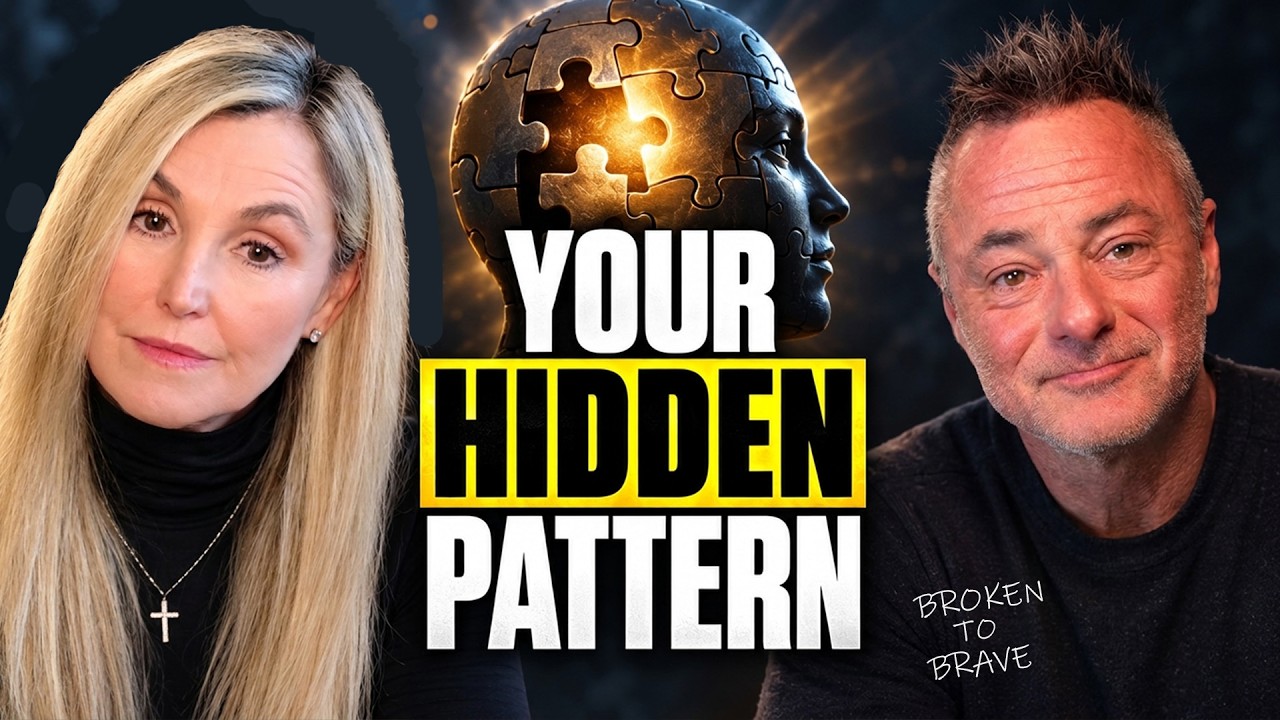
If you keep ending up with partners who aren’t right for you, you are not broken and you are not cursed. In this episode of my Broken to Brave podcast, I talk with Coach Aaron King, a relationship coach trained in Jungian depth psychology, about why we repeatedly choose the wrong people and how to break the pattern. Our conversation covers why the strongest chemistry can be the least reliable signal, how our “shadow” shapes who we are drawn to, and how to tell a trigger from a boundary.
Watch the episode above, then use the key takeaways below to start choosing differently.
Why do we keep choosing the wrong people?
Aaron’s answer starts with a reframe from Carl Jung: there is no “broken.” What we struggle with is the belief that we are broken, when really we are running patterns we adopted to make everything okay. Choosing the wrong partner is often one of those patterns.
Aaron calls the mindset behind it the “captured state of mind.” It is all about drama: you are the victim, they are the persecutor, and over time you trade roles and masks. The story stays the same and so does the type of person you pick.
What is projection in relationships?
Projection is when you place your own image, your best self or your hidden self, onto another person. Aaron describes the quick, intense “this person completes me” kind of chemistry as often being exactly that. You are not really seeing all of them. As he puts it, it is like Narcissus in the mirror: you are falling in love with your own unexpressed self through someone else.
The problem is that the relationship then depends on maintaining the projection. The vulnerability, curiosity, and gradual unfolding that make real intimacy possible cannot happen while you are only seeing your own image on top of them.
Chemistry is not the same as compatibility
Most of us chase chemistry, but I have long believed that real chemistry grows out of getting to know someone and truly seeing them. Aaron’s coaching experience backs this up: when he feels those “crazy butterflies,” he steps back and asks, “What am I really attracted to here?” It is not right or wrong, just worth noticing, telling the truth about, and making agreements around.
From my years as a matchmaker, I have seen the flip side too. We have all met the outwardly beautiful person we lost interest in once we knew who they were, and the person we barely noticed who became irresistible over time. Relationships that start fast usually end fast. The ones that last tend to begin with genuine affinity and curiosity, not an over-the-moon rush.
Is chemistry just anxiety?
Sometimes. Intense attraction can feel like chemistry when it is really anxiety, or the thrill of seeing your own hidden qualities in someone else. That does not mean you should ignore attraction. It means you should treat intense butterflies as a prompt to get curious rather than as proof that someone is “the one.”
What should you want instead?
My own standard is a best friend I can’t keep my hands off. If you run out of things to talk about after three to six months, the spark was likely all there was. A lasting relationship is the person you can talk to for hours, and who makes you feel safe enough to take your wall down.
How your shadow shapes who you choose
What is the shadow in Jungian psychology?
The shadow is the part of us we pushed out of sight as children because we learned it wasn’t okay to express it. Aaron explains that we create rules in our families that make it safe to be ourselves, and whatever gets pushed back on goes into the shadow. Parts of us then want to pull it back out, often through other people.
The shadow is not just our “bad” qualities. Aaron says it can be our superpower too. His perfectionism, learned from his father’s refrain, “if you’re not going to do it right, don’t do it at all,” held him back and also made him successful. He also pushed “don’t be too visible” into his shadow, and he kept being drawn to outgoing, outspoken performers. He was even married to an actor. The key to his growth was realizing there might be a little performer in him, too.
Why we are attracted to what we feel we lack
I see the same thing in my own life. I was a model, and I always wished I were taller, so tall men have always been attractive to me. We find highly attractive in others the things we would like to have ourselves. The useful question is whether that quality is something you can grow in yourself.
— Aaron King |
Triggers vs. boundaries: how to tell the difference
A boundary says what you will and won’t accept. A trigger is a reaction out of proportion to the situation. If you are still angry about dishes in the sink a week later, Aaron says, it is probably not about the dishes, and maybe not even about your partner. It signals a deeper rule you created to keep yourself safe, one you may no longer need as an adult.
I know this from experience. My mother had meltdowns around big planned events, and we would not go. As an adult, when plans fall through, I get upset in a way that is really about that old wound, not my partner. Understanding that keeps it from driving a wedge between us. Otherwise, your partner ends up walking on eggshells because your response doesn’t match the size of the moment.
What to ask yourself when you are triggered
- What is this reaction keeping me safe from?
- What would I risk by communicating honestly: rejection, not getting what I want, exposing something vulnerable, or admitting shame?
- Is this really about the person in front of me, or about something older?
How to stop choosing the wrong people: 6 steps from the episode
- Notice the rush. When you feel intense butterflies, pause and ask what you are really attracted to.
- Get to know the real person. Give curiosity time to replace projection, and watch how you feel after you spend time together.
- Tell the truth about your triggers. Name them rather than blaming your partner. Pointing the finger just makes people defensive.
- Make conscious agreements. Aaron says many of us stumble into relationships with unconscious agreements. Decide on the everyday things and the big things on purpose, and keep refining them.
- Have an “argument prenup.” Agree in advance how you will handle conflict. For example, tell your partner: “If this comes up, I’m likely to react this way, but I don’t want to.”
- Ask the quality question: “Do I feel loved?” If someone gives you only breadcrumbs, that is your answer.
Why honesty beats ghosting
We also talked about how to end things when someone is not right for you. I recommend saying so plainly: “I don’t think we’re right for each other.” It is more helpful to know where you stand than to be left hanging, and, as I like to say, your imagination is not your friend. Fantasizing about what something could be throws the balance off, because your brain responds as if it is real.
Aaron adds that the path of integrity is revealing yourself rather than hiding behind masks or texts to keep your distance. Either way, people get a message, so you might as well tell the truth. And when someone tells you no, accepting it without pushing back respects their boundary and is a better way to feel good about yourself.
Do the hard conversation before you leave
People are often willing to say everything on their way out the door because they have nothing to lose. I encourage having that conversation before leaving, because it may be what fixes the relationship. I share a personal example in the episode. I tend to reject when I feel rejected, and I have walked out of relationships that way. Telling my partner that, and then staying through a hard night instead of leaving, changed everything.
|
Build the relationship with yourself first
Aaron’s closing thought is that the relationship with ourselves comes first and then we take it out into the world. As we grow, we stop needing partners to express our shadow for us. Then, as Aaron says, we can build a “we life” instead of a “me and you” life. Two whole people, not two people who complete each other, negotiate a shared life, much like running a business: say what you want, check what is working, and keep refining.
Even if you are not there yet, I believe in this: you do not have to be perfectly happy in yourself before you love someone. Sometimes a relationship becomes the mirror that shows you what makes you happy and what still needs work.
Frequently asked questions
Why do I keep choosing the wrong partner?
Often it is a pattern, not bad luck. Intense chemistry can be projection: you are attracted to qualities in someone that reflect your own unexpressed self or shadow, so you fall for an image rather than the whole person. Awareness of the pattern is the first step to changing it.
What is projection in a relationship?
Projection is placing your own image, hopes, or hidden traits onto another person and then falling for that image. It makes the relationship depend on keeping the projection alive, which blocks real vulnerability and curiosity.
What is the difference between a trigger and a boundary?
A boundary is a clear statement of what you will or won’t accept. A trigger is an out-of-proportion reaction, often rooted in an old wound or a rule you created to feel safe. If you are still angry about a small issue a week later, it is probably a trigger worth exploring.
Is love at first sight a good sign?
Not necessarily. Instant, magnetic attraction can be a sign you are projecting, and relationships that start fast often end fast. Treat it as a cue to get curious, slow down, and see who the person really is.
How do I stop repeating the same relationship patterns?
Notice what you are drawn to, name your triggers, tell the truth early, make conscious agreements with your partner, and ask whether you feel loved. Working with a coach or therapist can help you see patterns you cannot see alone.
About the guest and where to find Aaron King
Aaron King is a relationship coach whose approach draws on Carl Jung’s depth psychology, with a focus on shadow work, triggers, and conscious agreements. Learn more at relationship.coach. He also hosts a monthly meetup in New Mexico called Better Boundaries, Triggers, and Better Relationships, with a short teaching, Q&A, and action items. Registration is open.