
Debunking Destructive Marriage Myths (And What to Do Instead)
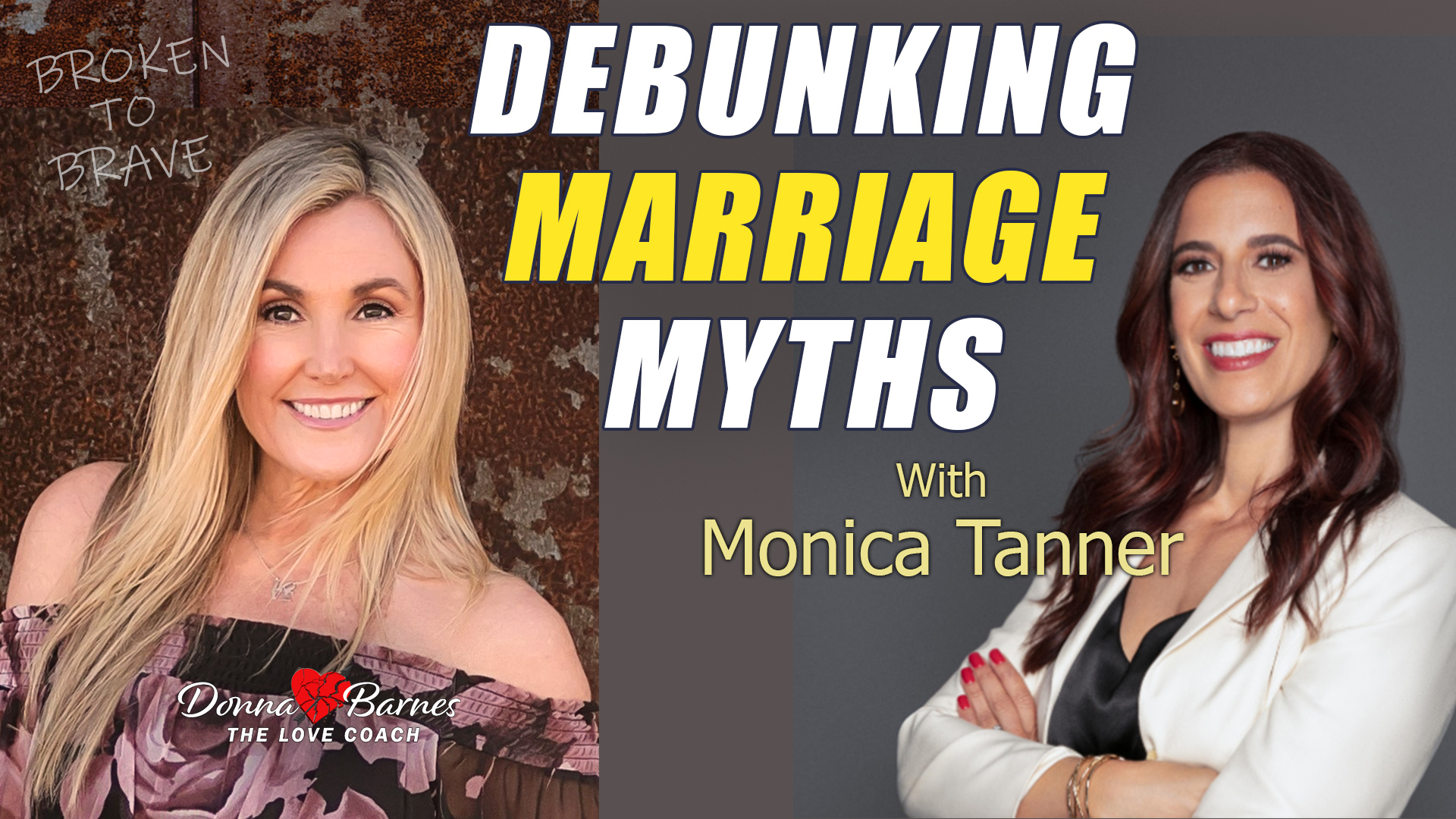
By Donna Barnes, The Love Coach
Featuring Monica Tanner, Author of Bad Marriage Advice and Host of Secrets of Happily Ever After
Marriage advice is everywhere — from well‑meaning relatives to social media soundbites that sound wise but quietly sabotage intimacy. In this conversation, love coach Donna Barnes sits down with Monica Tanner, marriage educator, author, and podcast host, to challenge some of the most common (and harmful) marriage myths — and offer healthier, modern alternatives that actually create connection.
Whether you’re engaged, newly married, or feeling disconnected in a long‑term relationship, this conversation will help you rethink what it really takes to build a happy, lasting partnership.
Why So Much Marriage Advice Is Outdated
Monica Tanner has been married for over 23 years and has worked with countless couples. Her journey began when her oldest son announced he was getting married — and she realized just how much bad advice gets passed down from generation to generation.
Much of the traditional guidance couples receive is well‑intentioned but outdated. Modern marriages ask more of us than ever before. Today, we want our spouse to be:
- Our best friend
- Our confidant
- Our adventure partner
- Our emotional safe place
- Our lover
That level of connection doesn’t happen by accident — it requires skill, especially communication skills.
Myth #1: “If They Love Me, They Should Know What I Need”
One of the most damaging myths in relationships is the idea that love equals mind‑reading.
We grow up surrounded by fairy tales that suggest if someone truly loves us, they’ll automatically know what we want, need, and feel. In reality, this belief creates disappointment, resentment, and emotional distance.
Truth: No matter how much someone loves you, they cannot read your mind.
Healthy relationships are built when partners clearly communicate their needs, desires, and boundaries, rather than expecting intuition to do the work.
Myth #2: “Happy Wife, Happy Life”
This phrase may sound harmless, but it often encourages one partner — usually the husband — to suppress their needs to keep the peace. Over time, this leads to resentment, emotional shutdown, and a loss of authenticity.
Truth: A healthy marriage honors both partners’ needs.
When one person consistently sacrifices their desires, the relationship loses its balance and power. Strong marriages are built on mutual respect, honesty, and teamwork, not emotional self‑abandonment.
Myth #3: “Marriage Is About Compromise”
This is one of the most commonly praised pieces of marriage advice — and one of the most misunderstood.
Traditional compromise often looks like:
- Keeping score
- Taking turns giving things up
- Quietly sacrificing what matters most
That approach breeds resentment.
The Better Alternative: Collaboration
Instead of compromise, Monica teaches collaboration.
Collaboration means:
- Getting curious about what each partner values
- Understanding why something matters
- Respecting differences without needing agreement
- Working together to create solutions that honor both people
When couples collaborate, they often discover solutions that are better than anything either person could have come up with alone.
Understanding Does Not Mean Agreement
One of the most powerful relationship insights discussed is this:
Understanding your partner does not mean you agree with them.
You can fully understand your partner’s perspective, feelings, and experiences without giving up your own. This distinction alone can transform conflict into connection.
When couples stop trying to prove who’s right and start trying to understand each other, respect and emotional intimacy naturally grow.
Don’t “Sweat the Small Stuff”… Or Should You?
Another popular phrase that causes more harm than help is “Don’t sweat the small stuff.”
The truth?
The big stuff usually comes from the small stuff that never got addressed.
When minor annoyances are ignored, they don’t disappear — they pile up. Over time, they turn into resentment, emotional distance, and recurring arguments that seem to come out of nowhere.
Healthy couples talk about small issues early — skillfully and kindly — before they become big problems.
Be Specific: Teach Your Partner How to Love You
A common frustration couples express is, “My partner never helps,” or “I don’t feel appreciated.” The problem isn’t the feeling — it’s the lack of clarity.
Vague complaints don’t give your partner a chance to succeed.
Instead:
- Be specific about what you need
- Make clear requests
- Allow your partner the freedom to say yes or no
When expectations are clear, resentment decreases and creativity increases. Couples can then work together to solve problems rather than silently stewing in disappointment.
Appreciation Is a Relationship Superpower
People are often quick to point out what they don’t like — but slow to express appreciation.
Acknowledging what your partner does well:
- Strengthens emotional safety
- Reinforces positive behavior
- Deepens intimacy and connection
If you think something kind, loving, or attractive about your partner — say it. Vulnerability builds closeness.
One Final Piece of Advice
If there’s one takeaway from this conversation, it’s this:
Don’t try to fix everything at once.
Choose one small skill to practice. Give yourself grace. Growth isn’t linear — it’s progress over time.
Strong marriages aren’t built on perfection. They’re built on curiosity, communication, and the willingness to grow together.
Want to Go Deeper?
You can find Monica Tanner’s free resources, podcast, and coaching programs at monicatanner.com.
To learn more about Donna Barnes and her work as a love coach, visit donnabarnes.com.
If this conversation resonated with you, consider revisiting it later — relationship insights often land differently depending on where you are in your journey.